The role of POCT testing in the diagnostic process: Clinical and operational implications
Join ADLM for two half-day educational workshops on decentralization and point-of-care testing (POCT) in Guadalajara, Mexico and Santiago, Chile.
The programs were developed by ADLM's Latin America Subcommittee, which provides education design oversight, and are sponsored by Roche.
As healthcare decentralization expands in Latin America, point-of-care testing (POCT) is playing an increasingly critical role in both hospital and non-hospital settings. Yet, gaps in regulation and quality management remain with 20% of laboratories report insufficient guidance (based on ADLM Latin American Working Group survey of experts in the field).
The following workshops are designed to bring leading experts to two Latin American cities to share strategies on navigating regulatory frameworks and overcoming barriers in decentralized systems to improve patient access and bring POCT innovations to communities that need them most.
Live workshop
- Marriott Courtyard Santiago Las Condes, Santiago, Chile
- November 4, 2025 | 09:00 - 14:00
Faculty
 Juan David Garcia, DCLS, MBA Doctor of Clinical Laboratory Science Director
Laboratory Services at University of Texas Director of Operations
The John Sealy Diagnostic Center at the University of Texas Medical Branch
 Alejandro Molinelli, PhD, NRCC-CC, FADLM
Director of Clinical Pharmacokinetics Laboratory at St. Jude Children's Research Hospital
Live satellite workshop at the 55th Mexican National Congress of Clinical Pathology
- Expo Guadalajara, Guadalajara, Mexico
- October 1, 2025 | 09:00 - 14:30
Faculty
Juan David Garcia, DCLS, MBA
Doctor of Clinical Laboratory Science Director
Laboratory Services at University of Texas Director of Operations
The John Sealy Diagnostic Center at the University of Texas Medical Branch
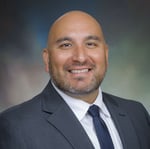
Eddie Salazar, PhD, MLS(ASCP)cm
Chair, Clinical Laboratory Sciences Department at the University of Texas Medical Branch
Target audience
This activity is designed for physicians, lab supervisors, lab directors (and/or assistant directors), lab managers (supervisory and/or non-supervisory), medical technologists, POCT coordinators, and other professionals involved in the regulatory oversight, selection, and applications of POCT in healthcare settings.
Learning objectives
At the end of this activity, participants will be able to:
- Describe key barriers to implementing Point-of-Care Testing (POCT) in decentralized healthcare systems, including limitations in infrastructure, workforce capacity, regulatory oversight, and data interoperability.
- Examine proven strategies and regulatory frameworks from the United States that support the successful implementation of POCT, including quality assurance practices, competency assessment models, and oversight structures such as CLIA and Joint Commission standards.
- Formulate context-specific recommendations to advance POCT adoption in Latin America by adapting best practices from U.S. healthcare models, with emphasis on scalable infrastructure, intersectoral collaboration, and sustainable policy innovation.
Disclosures and statement of independence
The Association for Diagnostics & Laboratory Medicine (formerly AACC) is dedicated to ensuring balance, independence, objectivity, and scientific rigor in all educational activities. All participating planning committee members and faculty are required to disclose to the program audience any financial relationships related to the subject matter of this program. Disclosure information is reviewed in advance in order to manage and resolve any possible conflicts of interest. The intent of this disclosure is to provide participants with information on which they can make their own judgments.
The following faculty reported financial relationships:
- Juan David Garcia, DCLS, MBA
- Honorarium: Roche
Content validity
All recommendations involving clinical medicine are based on evidence accepted within the profession of medicine as adequate justification for their indications and contraindications in the care of patients; AND/OR all scientific research referred to or reported in support or justification of a patient care recommendation conforms to generally accepted standards of experimental design, data collection, and analysis.
Accreditation statement
Each workshop is approved for 3.5 ACCENT® continuing education credits. This activity was planned in accordance with ACCENT® Standards and Policies.
The Advances in Clinical Chemistry Education and New Technology (ACCENT®) Program was established in 1982 to provide continuing education (CE) specific to clinical laboratory professionals. ACCENT grants credit to various educational activities developed by the Association for Diagnostics & Laboratory Medicine (formerly AACC) and outside organizations. The ACCENT program advances quality learning for clinical laboratory professionals that drives improvements in patient care.
ACCENT credit is accepted in all states where documentation for continuing education is required, including the following states: California, Florida, Louisiana, Montana, Nevada, North Dakota, Rhode Island, Tennessee, and West Virginia.
These activities are not eligible for California licensees to claim and submit continuing education credit for the purposes of maintaining licensure. This does not prevent California licensees from registering for and participating in these activities.
Successful completion statement
Verification of Participation certificates are provided to registered participants based on completion of the activity, in its entirety, and the activity evaluation. For questions regarding continuing education, please email education@myadlm.org.